
Housing for Older Adults: A Practical Guide for Individuals & Families

As people age, housing needs often change due to health, mobility, finances, and lifestyle preferences. Understanding the available housing options—and the challenges older adults face—can help families make informed, proactive decisions.
Aging in place refers to the ability of older adults to live safely, independently, and comfortably in their own homes and communities as they age, regardless of income, ability level, or health status.
Main Types of Older Adult Housing

- Home / Apartment – Aging in Place
Remaining in your current home or apartment as you age often involves:- Home modifications (grab bars, ramps)
- In-home care services
- Community-based support
- ✅ Best for: Those who are independent and prefer familiar surroundings
- Independent Living (Senior Communities)
- Age-restricted housing (typically 55+ or 62+)
- Apartments, condos, or cottages
- Amenities may include meals, transportation, activities
- ✅ Best for: Active older adults who want a maintenance-free lifestyle and social engagement
- Assisted Living
- Provides help with daily activities (ADLs):
- Bathing, dressing, medication reminders
- Private or shared apartments
- ✅ Best for: Individuals who need support but not full-time medical care
- Provides help with daily activities (ADLs):
- Personal Care Homes (Residential Care Homes)
- Personal Care Homes—sometimes called board-and-care homes or residential care homes—are smaller, home-like settings that provide non-medical support for older adults.
- What They Offer
- Assistance with daily activities:
- Bathing, dressing, grooming
- Medication reminders
- Meals and housekeeping
- 24-hour staff supervision
- A more intimate, family-style environment
- Assistance with daily activities:
- Typically, these homes serve a small number of residents (often 4–10 people) and are located in residential neighborhoods.
- ⚠️ Important Consideration – Licensing and oversight vary by state (in Texas, these may fall under assisted living regulations depending on size and services)
- Cost – Often less expensive than traditional assisted living, but still primarily private pay | Costs vary based on level of care and location
- Key Takeaway
- Personal Care Homes can offer a comfortable, home-like alternative to larger senior living facilities, especially for those who value close relationships, smaller environments, and personalized care.
- Long-Term Care / Skilled Nursing
- 24/7 medical care and supervision
- Often includes rehabilitation services (physical, occupational therapy)
- ✅ Best for: Individuals with significant health or medical needs
- Memory Care
- Specialized care for Alzheimer’s or dementia
- Secure environments and trained staff
- ✅ Best for: Those experiencing cognitive decline
- Continuum of Care Communities (CCRCs)
- Offers multiple levels of care in one location:
- Independent → Assisted Living → Skilled Nursing
- Allows residents to “age in place” as needs change
- ✅ Best for: Long-term planning and stability
- Offers multiple levels of care in one location:
Housing & Utility Assistance
- SACRD.org’s Housing Services Portal is a comprehensive tool designed to help San Antonians navigate complex housing needs – more than just finding a place to live. Follow a guided interview to quickly filter through areas of need, including rent and utility assistance, relocation support, reapir and maintenance, homemaking services, legal aid, and eviction and foreclosure support.
- AACOG (Alamo Area Council of Governments) – starting point for getting help.
- Area Agency on Aging – housed at AACOG, this local agency providing programs for older adults and caregivers is funded by local, state, and federal funding.
- Care coordination is a personalized service that helps older individuals assess their needs and connect with local resources to support independent living. Priority is given to seniors who have experienced a major illness, health crisis, or hospitalization and need additional support during their recovery process.
- Care Coordination services include:
- Income Support: Assistance with managing utility bills and ensuring financial stability.
- Health Maintenance: Support for health related needs, including eyeglasses, dental care, incontinence supplies, and more.
- Residential Repairs: Minor home repairs or modifications to ensure a safe and comfortable living environment.
- Personal Assistance: Help with daily activities, such as bathing, dressing, and other essential tasks.
- Emergency Response Systems: Electronic monitoring systems are installed to provide peace of mind and quick response in emergencies.

Alamo Service Connection
Information/Referral Service for
Aging, Disability and Veterans
Call Center Hours: Weekdays 8am-5pm
Bexar County: (210) 477-3275
Alamo Region: (866) 231-4922
- City of San Antonio – Neighborhood and Housing Services Department
- Opportunity Home
- Public housing & Section 8 vouchers – income based
- Catholic Charities / Salvation Army
- Emergency rent and utility assistance
Finding Housing
HOUSING BASE – a free digital platform and one-stop website launched by the City of San Antonio to help residents search for and find affordable rental housing. Users can filter for housing based on price, number of bedrooms, location, and proximity to amenities like public transport, grocery stores, and parks.
Home Repairs & Modifications
Home modifications allow older adults to remain safely and comfortably in their homes. These changes can range from simple, low-cost fixes to more extensive renovations depending on physical needs, mobility, and health conditions.
Services may include:
- Roof repair
- Weatherization (insulating for heat and cool)
- Accessibility upgrades (bathroom, doorways)
- Safety improvements (handrails, grab bars)
- Smart Home Technology
Examples of organizations serving eligible older adults with home repair and modification assistance:
- City of San Antonio – Home Repairs
- Assists eligible low-to-moderate-income homeowners, including seniors 62+, with small-scale repairs that address health, safety, and accessibility issues.
- Targeted Repairs: Plumbing, electrical, non-working utilities, roof shingle replacement, broken windows, damaged doors, and ADA accessibility modifications.
- The program operates on an “open application period” with a lottery system to select participants.
- CPS Energy– Casa Verde Weatherization Program: Provides free energy-efficiency upgrades to income-qualified older adults and homeowners, aimed at reducing energy consumption, improving home comfort, and lowering utility bills.
- Rebuilding Together Austin San Antonio: Repairs and accessibility modifications for low-income homeowners
- Blueprint Ministries: Home repair programs supporting seniors and safety improvements
- Building Hope Together: District 5 Only: Provides free home repairs, safety modifications, and legal assistance to secure housing.
- Merced Housing Texas: Owner-Occupied Repair Program (OORP) focusing on health, safety, and accessibility-related modifications for low-income homeowners, particularly older adults and people with disabilities.
- Texas Ramp Project: Builds wheelchair ramps at little or no cost
Rural Funding Resource for Home Repair
- For residents 62+ residing in towns with populations under 20,000
- The USDA Section 504 Home Repair program, officially known as the Single Family Housing Repair Loans & Grants program, helps very-low and low-income rural homeowners repair, improve, or modernize their homes.
- The program offers two types of assistance: grants up to $10,000 for very low-income seniors (62+) that never need to be repaid, and low-interest loans (1% APR) up to $40,000 for low-income homeowners of any age. Applicants can receive both a loan and a grant simultaneously, for a combined total of up to $50,000. The primary purpose is to remove health and safety hazards, make essential repairs, and provide accessibility modifications for disabled household members.
Home Assessments & Professional Support
Home Assessment
AARP HomeFit Guide – features smart ways to make a home comfortable, safe, and a great fit for older adults – and people of all ages.

Certified Aging in Place Specialists (CAPS)
- Assess safety and accessibility of the home, recommend modifications, and focus on fall prevention and mobility
- Professionals with this designation can be realtors, occupational therapists, contractors, physical therapists
Other professionals who can help with the home:
- Aging Life Care Managers (Geriatric Care Managers) – Help families evaluate housing decisions, coordinate care and services, and provide long-term planning support
- Senior Move Managers – Assist with downsizing and relocation, coordinate packing, moving, and resettling, and provide emotional support during transitions
How to Get Prescriptions for Medical & Home Needs
Older adults can access equipment and home modifications through prescriptions:
Who Can Prescribe?
- Licensed healthcare providers, like:
- Primary care doctors
- Physical Therapist
What Can Be Prescribed?
- Grab bars
- Grab bars are considered durable medical equipment (DME) by Medicare, falling into the same category as walkers, canes, and stair lifts. To qualify for this classification, the product must be something used in your home for a medical reason.
- Durable Medical Equipment (DME): walkers, wheelchairs
- Hospital beds
- Ramps
Process:
- Assessment by healthcare provider or OT
- Prescription or recommendation issued
- Insurance (Medicare/Medicaid) (May need to obtain – Letter of Medical Necessity)
- Vendor or contractor installs equipment
Local Organization Spotlight for Durable Medical Equipment: Project MEND -(Medical Equipment Network for those with Disabilities) is a San Antonio-based 501(c)(3) nonprofit organization that collects, refurbishes, sanitizes, and redistributes gently used medical equipment to individuals with disabilities, illnesses, or injuries. As the oldest and largest licensed medical equipment reuse facility in Texas, it serves as a critical resource for low-income individuals, veterans, and those with gaps in insurance coverage.
What Families Need to Know
1. Plan Early – Housing decisions become more limited during a crisis. Start conversations early.
2. Understand Levels of Care – Not all facilities provide the same services.
3. Know the Costs
- Assisted living is often private pay
- Skilled nursing may involve Medicare/Medicaid
4. Address Legal Issues Early
- Property ownership
- Estate planning
- Advance directives
5. Prioritize Safety
- Fall prevention
- Accessibility modifications
- Medication management
6. Build a Support Network
- Healthcare providers
- Social workers
- Community organizations
Housing for older adults is not “one-size-fits-all.” The best choice depends on:
- Health status
- Financial situation
- Family support
- Personal preferences
By understanding options, addressing financial and legal concerns, and connecting with local resources, families can ensure older adults remain safe, secure, and supported.
Estate Planning & Property Title Options
“Tangled title” happens when ownership of a home is unclear, often after a death without proper documentation.
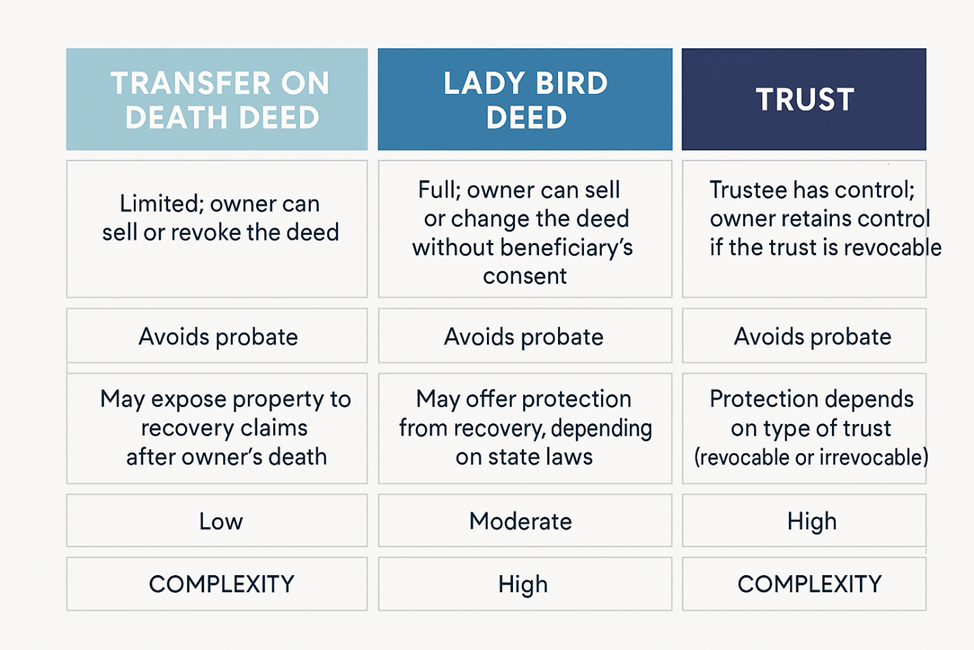
Common Legal Tools:
1. Transfer on Death Deed (TODD)
- Transfers property automatically after death
- Avoids probate
- Owner maintains control while alive
2. Lady Bird Deed (Enhanced Life Estate Deed)
- Allows owner to retain full control (sell, refinance)
- Automatically transfers upon death
- Protects against certain Medicaid estate recovery (state-specific)
3. Trust (Living Trust)
- Property placed in a trust
- Managed by a trustee
- Avoids probate and allows more detailed planning
Local resource for assistance and information on titles: Mexican American Unity Council (MAUC)